Personal Post: On Teaching English in Japan

Despite my best efforts, it’s been almost 3 months since I last wrote a post on Tokyo Trendy. In that time, I’ve been amazingly busy- including visiting family and friends across the US, starting my last semester, applying for jobs, dealing with some personal lows, and switching this blog over from its old location. I just wanted to thank everyone for sticking around despite my lengthy absence.

Image

A few of my favorite moments from Japan.

As a second semester senior in college, I’ve become to realize that the choices I make now are the ones that will affect my path in Real Life, that pesky thing I’ve been preparing 16+ years in the American education system for. In the last few months I’ve been struggling to figure out exactly which first steps to take, as if I’m a small child learning how to walk on my own for the first time.

Image

Do I want the “work in a cubicle for 50 years, get married, have kids, and go to Disney World” career path? Do I want to take time to see the world, since I may not have other opportunities later? Do I move immediately into a full time career, rather than taking time off like most college students my age? Do I move to a brand new city and leave everything I know behind? Do I do what’s comfortable and easy, or step outside my comfort zone?

Image

If you can’t tell from this blog, I love Japan. My love of Japanese culture and society extends back into the first grade, when my teacher let us dress up in kimonos and pick up goldfish crackers using chopsticks. I’ve immersed myself in Japanese popular culture and entertainment, taken Japanese language and literature courses, and even worked at a sushi restaurant. My time studying abroad in Tokyo made me fall in love with the country, and for the first time in my life, I felt like I belonged. Although my time there was not without its difficulties, I knew I wanted to return and begin a life there.

Image

For the first time in my life, I truly have the freedom and opportunity to choose my own path. And with graduation looming on the horizon, I’ve begun to look at opportunities that will lead me back to the land of the rising sun.

For many college graduates like me, with only a diploma and non-fluent language skills, teaching English is a viable career path. It’s not the best paying salary, nor is there a lot of opportunity for growth, but it’s a way to live in Japan. For a year or more, you have the opportunity to not only expose children to your own culture and traditions, but also completely immerse yourself in a new society. You get to live in a Japanese town or city, eat Japanese food, and live a Japanese way of life. For someone looking to travel after university- and with a bleak job market waiting back home in the US- teaching English can be an amazing way to spend a few years abroad. Japan is my passion, and teaching English would be a way to return the country that inspired me throughout so much of my life.

Image

The only problem is, I’m not sure this is the right path for me.

As Confucius said, “Choose a job you love, and you will never have to work a day in your life.” For me, this means indulging in another one of my passions: reading. Over the past few months, I’ve begun to dive into career opportunities in the publishing industry, and I feel a thrill of excitement at the prospects of spending my life surrounded by books. I get this same thrill thinking about living in Japan, but not about teaching English.

Image

And as much as I want to return to Japan, I don’t think going for a job I don’t love is the best decision.

Image

This doesn’t mean that I’m stopping to dream of Japan. On the contrary, I’m motivated now more than ever to find a way to cultivate my passion. Despite what the future may bring, I still want to see Japan again, and if possible, live there once more.

Image

In a perfect world, I would be able to find a career that combines all of my passions into one. Know of any English-speaking publishing jobs in Tokyo? Let me know. Until then, I’m going to keep dreaming, learning the language, and exploring Japan as much as I can.

Image

Japan is still there, waiting for me. But until then, it’s time to start living my life.

Thanks for reading,

Marina

マリナ

Image

Hakone

Although Mount Fuji lies only 80 miles from the heart of Tokyo, it’s hard to see the mountain from the city unless it’s a perfectly clear day. While I arrived in Tokyo at the end of Mount Fuji’s official climbing season, I still wanted to get up close and see one of Japan’s most iconic landmarks.

Mount Fuji Hakone

If you want to enjoy spectacular views of Mount Fuji without climbing it, the tourist town of Hakone offers almost any activity you can imagine, from shopping and exploring museums to relaxing in onsen (hot spring resorts). Hakone lies in the Kanagawa prefecture of Japan, a little over an hour outside of Tokyo.

Hakone Japan

One of the biggest draws of Hakone is Lake Ashi, a scenic lake formed by a crater near Mount Hakone. The lake offers views of Mount Fuji, boat cruises, and several hot springs resorts. Although I stopped at a point where Mount Fuji was barely visible, the beautiful lake more than made up for my lack of view.

Lake Ashi Hakone

Mount Fuji, peeking out behind another mountain in the distance

Lake Ashi Hakone

Many of the pleasure cruise boats on Lake Ashi are modeled after traditional sailing ships, which you can see to the left.

Many vantage points along the shores of Lake Ashi offer souvenir shops as well. If you’re looking for a Fuji-inspired present or a traditional Japanese craft, make sure to stop by.

Mount Fuji souvenirJapanese souvenir

Mount Fuji souvenir

Mount Fuji coin purses! Aren’t these cute?!

 For beautiful views of Mount Fuji, Lake Ashi, and the surrounding countryside, I highly recommend taking a gondola among the mountains, called the Hakone Ropeway. The aerial lift has several stops around the mountains, ending in a stop right by Lake Ashi. This line is one of the best opportunities for sightseeing in the area, particularly during the fall when the leaves are changing.

Hakone ropewayHakone ropeway

Hakone ropeway

While you can take the gondolas for a round trip, I recommend getting off at Owakudani, or the Great Boiling Valley. Owakundani is a volcanic valley with active sulfur vents and hot springs, which offers even better views of Mount Fuji on a clear day, hiking trails along the vents, and souvenirs. You can definitely smell the sulfur in the air, but it’s pretty cool to walk along active steam vents.

Owakundani

Owakundani

Owakundani

Mount Fuji, from a view at Owakundani

Owakundani is known for its kuro tamago, or black eggs. These are a local specialty food in Hakone, where the eggs are boiled in the sulfur hot springs.  As a result, the egg turns black from a chemical reaction and smell like sulfur. Eating a kuro tamago is supposed to add longevity to your life (seven years for every egg), but be warned: if you eat more than two and a half in seventeen years, there could be dire (and unexplained) consequences. I thought the eggs tasted exactly like normal hard-boiled eggs, but eating one gave me a stomachache later.

Owakundani

Hello Kitty/Kuro Tamago photo opportunity? DUH.

Owakundani

Owakundani

The majestic black egg. Oh, and Mount Fuji in the background.

Owakundani Kuro tamago

Just a normal egg on the inside.

If you’re interested in more manmade attractions, Fujiya Hotel is another Hakone must-see. This historic hotel was built in 1891, and is a mixture of both western and Japanese architectural elements that were popular during the Meiji period in Japan. The beautiful hotel has hosted many notable people and celebrities over the years, including the Archduke Franz Ferdinand of Austria, John Lennon and Yoko Ono, Charlie Chaplin, Helen Keller, and the Showa Emperor.

Fujiya Hotel HakoneFujiya Hotel Hakone

Fujiya Hotel HakoneIf you can’t stay overnight at the hotel, make sure to take a tour of its rooms and historic artifacts, and plan to stay for dinner. Fujiya is famous for its beef curry, which is served in its French-inspired restaurant.

Fujiya Hotel Hakone

Fujiya’s famous (and expensive!) beef curry.

I ended my time in Hakone at the Hakone Open-Air Museum, a park full of beautiful sculptures, interactive art that you can play on, galleries, and more. With works by Picasso and Henry Moore, it’s a great way to walk around in the fresh air and enjoy some art. My favorite part was a tower constructed from stained glass, which you could climb up inside and enjoy views of Hakone’s countryside.

Hakone Open Air MuseumHakone Open Air MuseumHakone Open Air Museum

Whether you’re looking for spectacular views of Mount Fuji or just want a break from Tokyo, Hakone offers an activity for everyone. Bring good walking shoes and plenty of spending money, as you’ll definitely want to try more than one destination. Hakone is a perfect place to grab an iconic picture of Mount Fuji, and still have plenty more to do.

Hakone Open Air Museum

Next time I’m in Japan though, hopefully I’ll be able to photograph Mount Fuji from its summit instead.

Mount Fuji Hakone

Sweets Paradise

Happy holidays, everyone! It’s the day after Thanksgiving, and if you live in America, you’re either fist fighting for TVs at Walmart or rolling on the floor and complaining about how full you are. I’m definitely part of the latter, and today I want to share a foodie experience in Japan that will make you want to curl up in a ball afterwards.

Welcome to Sweets Paradise….an all you can eat dessert buffet in Japan.

Sweets Paradise Japan, cake buffet

Sweets Paradise has a number of locations across Japan, from Shibuya and Harajuku in Tokyo to Hiroshima and Fukuoka down south. If you love dessert or anything sweet and girly, you should definitely check this place out.

Sweets Paradise Japan

Inside a Sweets Paradise….via Flickr.

Upon entry, customers buy a ticket from a small machine (similar to those at ramen shops) for around $15 a person. Dining at the buffet is limited from 70 to 90 minutes, but have no fear- this is more than enough time to stuff your face.

Sweets Paradise Japan

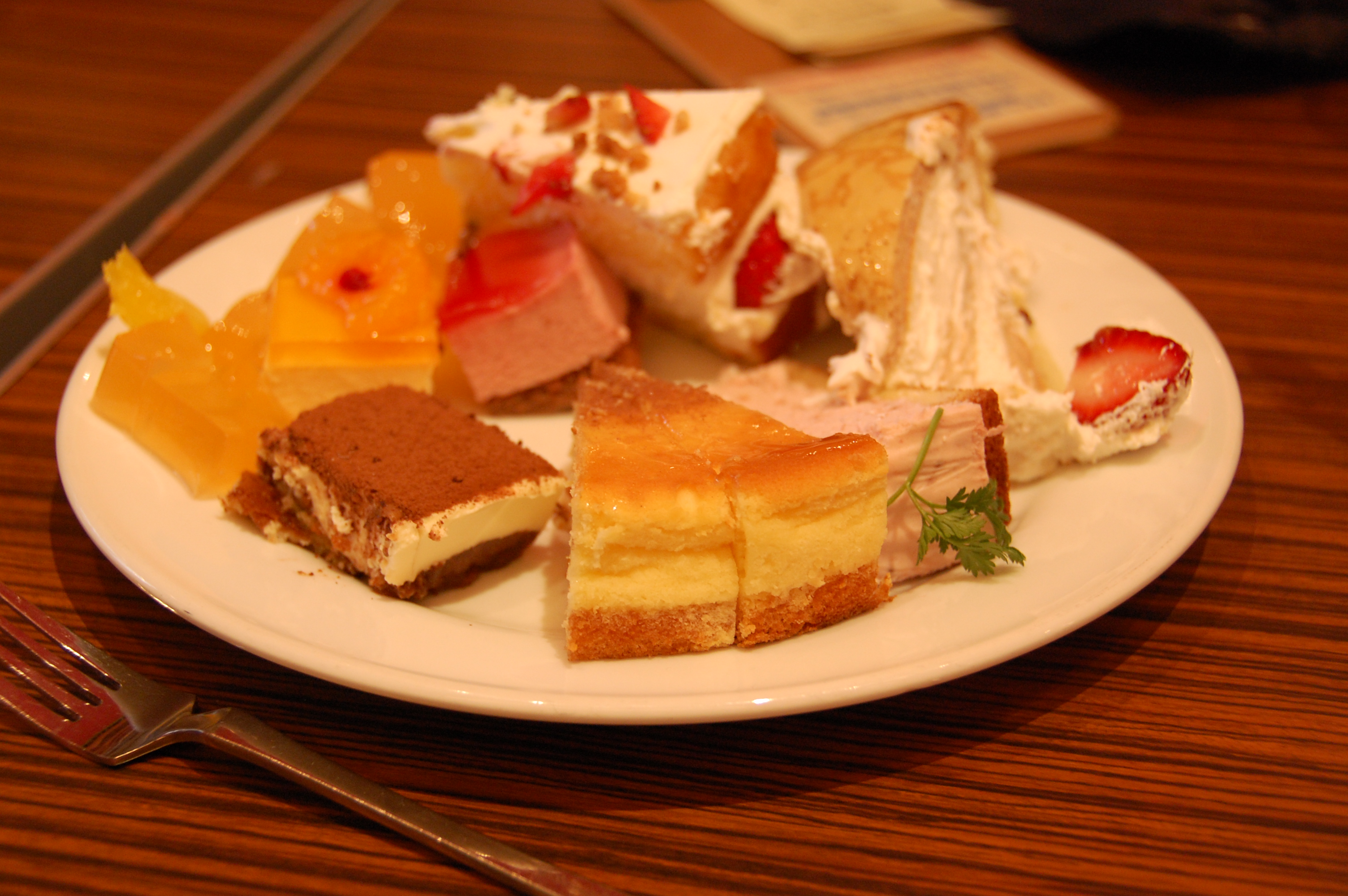
Behold the glory!

At the buffet, Sweets Paradise has a huge number of sweets, ranging from strawberry shortcake and tiramisu to traditional Japanese sweets such as mocha and green tea cake. There are also a number of seasonal items, such as pumpkin in the fall and Christmas cake in December. At the end of the buffet, many locations even have a chocolate fountain, and a multitude of cookies, fruits, and other treats to dip.

Sweets Paradise Japan

A selection of deliciousness

If you’re in the mood for something a bit colder, the buffet also has soft serve with every type of topping imaginable as well as a shaved ice machine. Need something to drink? There’s a coffee and espresso machine, a soda machine, and a dozen types of hot and cold tea to suit your fancy.

Sweets Paradise Japan

Tea and cappuccino

Too many sweets at once? Don’t worry- Sweets Paradise also serves a huge variety of pastas, curries, rice, pizza, soup, and salad. This way, you can keep enjoying dessert without being overwhelmed by all the sugar.

Sweets Paradise Japan

Pasta and garlic bread…nom nom nom.

Whenever a new dish is ready, the staff at Sweets Paradise ring a bell to let the customers know. “Chocolate cake is here!” they’ll shout. “Please come and enjoy.”

Sweets Paradise Japan

If you love dessert or are just looking to gorge yourself at a buffet, Sweets Paradise is for you. Come with an empty stomach, and try some Japanese desserts that you’ll be hard-pressed to find at an affordable price anywhere else. Check out their website, and look at some of the delicious sweets they have to offer! The menus are in Japanese, but I think the pictures speak for themselves…and definitely make me hungry.

What’s your favorite dessert? Thanks again for reading, and I hope you saved room for cake tonight!

Kyoto

Kyoto is the final stop on my Kansai journey, and one of my absolute favorite places in Japan. Kyoto is truly the cultural capital of Japan, with buildings and temples that are hundreds of years old and rich history around every corner. Kyoto served as the capital of Japan for over a thousand years (until 1869) and was formerly known as Heian-kyo, or “the capital of tranquility and peace.”

A first glimpse of Kyoto- along the canals

A first glimpse of Kyoto- along the canals.

Although Kyoto is only the 8th largest city in Japan, millions of tourists flock to Kyoto to check out its amazing fall foliage, spring hanami, beautiful temples, and more. With over 2000 Buddhist temples and Shinto shrines, Kyoto is one of the best culturally preserved cities in the world.

Kyoto

I began my journey at Yasaka Shrine, a Shinto shrine that draws thousands of people for New Years celebrations and the Gion Matsuri, a world-famous festival and parade. Just inside its gates, you can purchase Japanese street food from a variety of vendors as you make your way to other sites.

Yasaka Shrine Kyoto

Yasaka Shrine

Yasaka Shrine Kyoto

Many people pass through Yasaka Shrine on their way to Maruyama Park, another extremely popular place to view cherry blossoms in the spring and autumn foliage in the fall. The park has dozens of beautiful walkways, ponds, and Japanese gardens, and many people come here to take pictures in kimono or traditional dress.

Maruyama Park

Maruyama Park KyotoMaruyama Park Kyoto

Maruyama Park Kyoto

Maruyama Park is a perfect place to take pictures. Many tourists visit in beautiful kimono, such as this woman.

From Maruyama Park, you can easily walk to other temples or cultural heritage sites in the area. My favorite was the Higashiyama district, one of Kyoto’s best preserved historical areas. Between its narrow lanes, wooden buildings, traditional architecture and hundreds of small shops, you truly feel as if you are in Heian-kyo or the old capital city.

Higashiyama district kyoto

The crowded streets of the Higashiyama district.

Higashiyama district kyoto

The district is based on the lower slopes of Kyoto’s eastern mountains, so the walk includes many sets of stairs and inclined walkways. However, the hundreds of traditional shops definitely make up for the physical effort. These souvenir shops, cafes, traditional goods markets, and restaurants have been open for centuries. They continue to sell many local goods- including sweets, fabric crafts, pickles, pottery, and more- today.

Higashiyama district kyoto

Kyoto is famous for its fabric goods, which can be found in many of its traditional shops. These are little plush sushi souvenirs!

Higashiyama district kyoto

Higashiyama district kyoto

A sign for a famous cosmetics company in Japan

When walking through any part of Kyoto, you may also see young women dressed in bright and elaborate kimono, with white makeup and intricate hairstyles. These women are known as geisha, Japanese entertainers who perform traditional arts such as dance and classical music. Geisha are often regarded as one of the most famous cultural symbols of Japan, even though their numbers are severely decreasing. While there used to be over 80,000 geisha in Japan during the early 20th century, today there are less than 2,000.

Kyoto geisha

Kyoto geishaHowever, most of the women you see dressed up on the streets are not true geisha, but tourists who pay anywhere from $100 to $500 to be dressed up, have their photo taken, and walk around. Real geisha are often swarmed by photographers as they leave their homes or entertaining sites, and carry themselves in an extremely sophisticated and professional manner. Many of the “geisha” you see on the streets in Kyoto are laughing, taking silly pictures, or are wearing accessories that aren’t appropriate for the current season. Either way, they still look beautiful!

Kyoto geisha

Kyoto geisha

These girls definitely knew that I was taking their picture.

Kyoto geisha

This girl is a gaijin (foreigner) dressed up. I still could’t resist taking taking her picture.

Gion, a traditional district in Kyoto that originated during the Middle Ages, is one of the most well-known geisha districts in all of Japan. This district may sound familiar; it’s the setting for Arthur Golden’s famous novel Memoirs of a Geisha. The streets, which run along the Shirakawa Canal, have a number of traditional teahouses (called ochaya) and other entertainment venues that geisha still frequent today. We didn’t see any, but it was still an amazing experience to walk along the same streets that I had only read about before.

Gion kyoto

Gion kyoto

A beautiful lantern in Gion

Gion kyoto

Shirakawa Canal

Gion KyotoAlthough there are thousands of beautiful temples and shrines to see in Kyoto, one final point of interest that I recommend is Fushimi Inari-taisha, a Shinto shrine that is famous for its thousands of torii gates. This shrine has walking trails up a mountain that are flanked by thousands of wooden torii, which are donated by businesses and individuals. This shrine is the most important out of thousands of shrines across Japan dedicated to Inari, the Shinto god of rice.

Fushimi Inari-taisha Kyoto

Fushimi Inari-taisha Kyoto Fushimi Inari-taisha Kyoto

I unfortunately visited Fushimi Inari-taisha in the dark, but the thousands of torii were still breathtaking. I recommend visiting with plenty of daylight left, so you can climb the mountain and enjoy some spectacular views of Kyoto.

Fushimi Inari-taisha KyotoDSC_4762 If I ever return to Japan, I want to spend at least a week more exploring Kyoto. There’s so much to see and do, and yet I barely scratched the surface!

Thanks again for reading, and happy Thanksgiving!

Okonomiyaki

A few weeks ago, I talked about some of my favorite Japanese street foods. However, I left one out that is extremely popular both on the street and in restaurants across Japan. Okonomiyaki is a fried pancake, usually composed of batter and cabbage, which can have any number of toppings and mix-ins. This is reflected in its very name; okonomi literally means “to your liking” and yaki means “cooked or fried.”

Okonomiyaki

Via Flickr

While you can find okonomiyaki all over Japan, like ramen, the styles and toppings vary greatly from region to region. It’s most popular in the Kansai area of Japan (around Osaka, Nara, and Kyoto) and Hiroshima.

Okonomiyaki

Okonomiyaki from Osaka, via Flickr.

Like takoyaki, the pancake batter in okonomiyaki is not sweet. It’s filled with a number of savory ingredients, such as octopus, squid, shrimp, vegetables, or kimchi.

Just some of the ingredients you can put in okonomiyaki. Green onions, pickled ginger, egg, mushroom, and pork. Via Flickr.

Just some of the ingredients you can put in okonomiyaki. Green onions, cabbage, pickled ginger, egg, mushroom, and pork. Via Flickr.

In Japan, okonomiyaki is typically served at restaurants that only specialize in this dish. There is usually a large griddle at each table or in front of the customer at the bar counter, where the chef or server will cook the okonomiyaki for you.

Okonomiyaki

An okonomiyaki restaurant in Hiroshima. Via Flickr.

There are also many restaurants where you cook it yourself (like I tried), but I wouldn’t recommend this unless you know what you’re doing, or go with someone who has cooked it before!

okonomiyaki

Our personal grill at a cook-it-yourself okonomiyaki restaurant

First, customers order what ingredients they would like in their pancake and the server or chef brings out a bowl of raw batter, vegetables, and seafood or meat. Then, everything is mixed together and placed on the hot griddle in a pancake-like shape.

Okonomiyaki

Okonomiyaki

Mixing the ingredients

Okonomiyaki

Once one side is cooked, you use large metal spatulas to flip the pancake over. This is usually the hardest part of cooking okonomiyaki, and without patience or practice, it can end up breaking apart.

Okonomiyaki

Definitely the hardest part of cooking okonomiyaki. It took us a few tries to keep everything together (but it still tasted delicious!)

Once the pancake is cooked all the way through, you can add traditional toppings. First is okonomiyaki sauce (basically the same as takoyaki sauce), then Japanese mayo, katsuobushi (bonito fish flakes), and dried seaweed. Okonomiyaki is then usually broken into bite-sized pieces and left on the cooking surface, so that each piece is hot and eaten right off the griddle.

Okonomiyaki

Okonomiyaki sauce (brown glaze), dried seaweed (green flakes), katsuobushi (brown flakes), and Japanese mayo (white lines). Via Flickr.

This type of okonomiyaki (Kansai style) is the most popular and can be found all across Japan. In comparison, the Hiroshima style has layered ingredients rather than mixed. The batter is cooked like a thin crepe and the other ingredients are added as toppings, rather than mixed into the batter. Yakisoba or udon noodles are also an extremely popular layer, topped with a fried egg and a liberal amount of okonomiyaki sauce.

Okonomiyaki

Hiroshima style okonomiyaki. Via Flickr.

While this dish is extremely popular in Japan, I haven’t been able to find it at all in the US. Do you know where I could find some?

In the meantime, I guess I’ll have to try cooking it myself. Just One Cookbook, one of my favorite Japanese food blogs, has a great okonomiyaki recipe. Try it out, and let me know what you think!

Osaka

Osaka is the second largest metropolis in Japan, and is located in the Kansai region about 3 hours away from Tokyo by bullet train. It’s the capital of Osaka prefecture as well as the largest part of the Keihanshin metropolis, which is composed of the cities of Kyoto, Osaka, and Kobe.

Via Flickr

Via Flickr

 Historically, Osaka is the commercial center of Japan and was the country’s center for trading rice in the Edo period. Today, Osaka still functions as a major center for the Japanese economy and is home to several important electronic companies, including Panasonic and Sanyo.

Osaka Skyline via Flickr

Osaka Skyline via Flickr

 Although I didn’t spend much time in Osaka, this is one city that I definitely want to revisit. Because Osaka is also known for its food, I began my travels in Dotonbori, a street in the center of the city that is famous for its flashing neon signs, dozens of restaurants, and regional cuisine.

Dotonbori OsakaDotonbori OsakaDotonbori is a huge tourist attraction and the main destination for food travel in the Kansai region. Here, you can try many cuisines such as takoyaki, okonomiyaki, udon noodles, and sushi. We visited a well-known takoyaki restaurant and spent a half hour in line just to try it!

Dotonbori Osaka

Takoyaki restaurant in the Dotonbori

takoyakiOsaka

Takoyaki

Takoyaki lights!

TakoyakiIn Osaka you often hear or see the word kuidaore, which literally means ““to ruin oneself by extravagance in food.” This is exemplified in many local proverbs, particularly ones that compare the city to Kyoto. One old saying says that while Kyotoites spend all their money on shopping and kimonos, Osakans are ruined by spending money on food.

DSC_5280

Zubora-ya

Zubora-ya, a famous pufferfish lantern outside of a fugu restaurant

And with so many delicious options, it’s easy to see how.

Dotonbori Osaka

If you need somewhere to walk off all the food in Dotonbori, Osaka Castle is another popular tourist destination and a beautiful history site. Surrounded by Osaka Castle Park, the castle is one of Japan’s most famous buildings and played a major role in uniting Japan during the 16th century.

Osaka Castle Park

Osaka Castle Park

Osaka Castle ParkOsaka Castle

Osaka Castle was built in 1583 under orders of Hideyoshi Toyotomi, a territory lord and general who is revered as Japan’s second great unifier. While it was burned down in several battles, the castle was rebuilt in the early 20th century and is considered a symbol of Osaka.

Osaka Castle

The castle is open to the public, and contains a museum inside with many artifacts and displays about the 16th and 17th century. On the 8th floor, you can also enjoy amazing open-air views of the city.

Osaka Castle

DSC_5389

DSC_5434Osaka also offers attractions for all ages, including the second largest aquarium in the world, traditional theaters, shopping districts, an enormous Ferris wheel, and more. Plan to stay for a few days, and make sure to bring plenty of money for food. You may leave a few pounds heavier than when you came, but with so much to try and do, it’s definitely worth it.

Osaka Castle

Osaka CastleI’ll be finishing my tour of the Kansai area next week, but thanks again for reading! What kind of travel destinations do you prefer, historical or modern?

Japanese Food Blogs

Have you ever tried cooking Japanese food yourself at home? Now, I know sushi looks excruciatingly complicated, but there are so many other types of Japanese food that are easy to make in your own kitchen! Here in Boston, I constantly try to recreate the meals I enjoyed in Tokyo, such as tomato ramen, Japanese curry, and gyozas.

Homemade Ramen

My own homemade ramen!

I’ve found that many people are intimidated by unfamiliar ingredients, particularly ones that need to be purchased in Asian grocery stores. However, with the right recipes or inspiration, Japanese food is easy to make and extremely delicious.

On today’s Food Feature Friday, I’m divulging from my usual routine and featuring a few of my favorite Japanese food bloggers. So what are you waiting for? Get cooking!

1. Just One Cookbook

Just One CookbookJust One Cookbook is a Japanese food blog written by Nami, a Japanese native who now lives in San Francisco with her family. She posts traditional Japanese recipes that she makes for her family, from sushi and bento boxes to Japanese deserts. Each of her recipes is extremely easy to follow, and include professional photographs that will make your mouth water.

Oyakodon by Namiko Chen- Just One Cookbook

Oyakodon by Namiko Chen- Just One Cookbook

 What really sets Just One Cookbook apart is her explanation of many traditional Japanese ingredients. Nami goes through typical condiments, sauces, and essential foods that are common in Japanese households, but may stump a casual chef. She even explains many Japanese cooking techniques, including wrapping dumplings, preparing seafood for cooking, and even creating decorative garnishes.

Whether you’re looking for a creative bento box for your kids or a delicious recipe for dinner tonight, Just One Cookbook has you covered. Sign up for her emailing list and get new recipes straight in your inbox, with first access to food giveaways as well.

2. Sushi Day

Screen Shot 2013-11-15 at 10.51.46 AMSushi Day is a great resource for the aspiring sushi chef, or someone looking for new sushi recipes to try. The blog is written by Allison, a web developer from California who also has a passion for sushi. Sushi Day offers everything from simple nigiri (one piece of fish over rice) to inventive maki, such as Honey Green Tea Tilapia rolls, Unicorn rolls, and even rolls using leftover Thanksgiving food!

Lemon Drop Roll by Allison Day- Sushi Day

Lemon Drop Roll by Allison Day- Sushi Day

While Sushi Day is not a blog for beginners, as many of the recipes include sophisticated ingredients or require a few sushi skills, it’s still a great blog to check out. Even if you’re not a sushi chef, the great pictures will make you want to become one. Sushi Day also features tutorials, reviews, and photo features of Allison’s travels in both California and in Japan.

Porki Maki by Allison Day- Sushi Day

Porki Maki by Allison Day- Sushi Day

3. Luxeat

Luxeat

Although this blog isn’t about cooking and recipes, Luxeat is one of my absolute favorite foodie blogs to follow. It’s written by Aiste, a top fashion model who is also passionate about food and travel. Luxeat follows Aiste’s adventures travelling around the world, and the amazing fine cuisine she eats wherever she goes. She’s been to France, Berlin, Spain, Hong Kong, London New York and more, and always has amazing photos documenting her experiences.

My favorite part about Luxeat, however, is her adventures in Japan. Aiste has been to some of the top (and most expensive!) restaurants in Tokyo, Osaka, and Kyoto. From the legendary Sukiyabashi Jiro Ginza (made famous in the documentary Jiro Dreams of Sushi) to the most expensive tempura in the world, Aiste has tried it all.

Luxeat is perfect for exploring some of the best high-end restaurants in Japan, especially since you’ll probably never get a chance to try them. Just be warned: your neighborhood sushi restaurant probably won’t cut it after seeing some of the masterpieces on this blog.

 That’s it for today’s Food Feature Friday! What are your favorite Japanese food blogs? I’m dying to read more!

How Large is Tokyo?

Via flickr

Via flickr

Just exactly how large is Tokyo?

A view from the 35th floor in a building near the Tokyo Sky Tree

The answer: mindbogglingly huge.

Whenever I try to explain how large Tokyo is, a lot of people have trouble imagining the vastness of a single city. They imagine other fairly dense cities like Boston or New York, where you can hop on a train or drive from edge to edge in just an hour (never mind traffic, of course!).

Via flickr

Tokyo, however, isn’t just a city. It’s the largest metropolis in the world.

A satellite view of Tokyo

A satellite view of Tokyo

By official counts, Tokyo is a mere 845 square miles and has a population of around 8.9 million people. However, if you consider the greater Tokyo Area, these numbers swell dramatically to an area of 5,200 square miles and a population of 40 million.

40. Million. People.

DSC_1815

Even when you live at the center of Tokyo, it’s sometimes hard to grasp that you’re living in one of the densest population areas in the world. The greater Tokyo area is only .036 of Japan’s total landmass, and yet accounts for 30% of Japan’s population (10% if you only count the 23 wards).

DSC_1841

Because 70% of Japan’s land is made of mountains and forest, a lot of people don’t appreciate how large and dense Tokyo actually is.

The picture below was taken from a helicopter and covers the greater Tokyo area- the 23 wards of Tokyo, areas west of Tokyo, and the surrounding prefectures Chiba and Saitama. (via Reddit)

The picture below was taken from a helicopter and covers the greater Tokyo area- the 23 wards of Tokyo, areas west of Tokyo, and the surrounding prefectures Chiba and Saitama. (via Reddit)

In comparison, this photo shows some of the major railways and landmarks of Tokyo. I went to school near the Tokyo Tower, and took the Yamanote line (green) for half of my commute. The Yamanote line is a circle around the center of Tokyo. Over 3.6 million people take the Yamanote line per day. In comparison, the busiest airport in the world (Atlanta International, USA) only services 240,000 people per day….that’s how many people in Tokyo use public transportation in a half hour. (via Reddit)

In comparison, this photo shows some of the major railways and landmarks of Tokyo. I went to school near the Tokyo Tower, and took the Yamanote line (green) for half of my commute. The Yamanote line is a circle around the center of Tokyo.
Over 3.6 million people take the Yamanote line per day. In comparison, the busiest airport in the world (Atlanta International, USA) only services 240,000 people per day….that’s how many people in Tokyo use public transportation in a half hour. (via Reddit)

 In Tokyo, it’s hard to see the forest through the trees. But if you do rise above the urban sprawl, it’s absolutely amazing. Being in Tokyo can make you feel ridiculously small and insignificant, but at the same time, it’s enchanting. You’re part of something so much larger than yourself.

via Flickr

via Flickr

Nara Prefecture

Although I spent most of my time abroad in Tokyo, I had the amazing opportunity to check out other famous cities and areas in the Kansai region of Japan. One of my favorite places to go was Nara, a small prefecture and city about 3 hours away from Tokyo by bullet train. Nara was the capital of Japan from 710 to 784, and lends its name to the Nara period.

While the city itself isn’t much to look at, Nara is rich with history, particularly when it comes to temples. There are 8 temples, shrines, and ruins in Nara (known as the Nanto Shichi Dai-ji), which remained powerful even after the capital of Japan moved to Heian-kyo (modern Kyoto) in 794.

Nara Park Nara Japan

However, my favorite part about Nara was…the deer.

Sika Deer Nara Japan

Hi there!

Yes, that’s right. I said deer. According to local folklore, deer in Nara became sacred after one of the four gods of the Kasuga Shrine appeared on a nearby mountain riding a white deer. From then on, the deer were considered to be divine, and killing one was a capital offense punishable by death. Although the deer were stripped of their sacredness after World War II, they’re still considered National Treasures of Japan.

Sika Deer Nara Japan

Sika Deer Nara Japan

Whutcha doing?

Sika Deer Nara JapanToday, the miniature Shika deer can be found wandering around Nara Park and on some temple grounds. They’re extremely friendly and can be pet (although you might want to wash your hands afterwards).

Sika Deer Nara JapanSika Deer Nara Japan

You can also buy stacks of rice crackers from vendors along the road and feed the deer from your hands. Just be careful though- once the deer know you have food, they won’t leave you alone. I was stalked by a deer for a good 15 minutes, and when I wouldn’t keep feeding him, he head-butted me several times.

Sika Deer Nara Japan

This deer knows what’s up. He’s stalking one of the cracker vendors from behind.

Sika Deer Nara JapanSika Deer Nara Japan

Sika Deer Nara Japan

Here’s my stalker deer friend literally moments before he head-butted me. Notice the sheer terror in my face.
Don’t worry though, I survived.

The deer are also extremely intelligent and have been known to wait at stoplights before crossing the street. You can even bow to the deer, and some will even bow back! I had an elderly Japanese couple laugh at me when I tried this, but once I walked away, I saw them trying the same exact thing.

Sika Deer Nara JapanSika Deer Nara Japan

Like I mentioned earlier, Nara is home to several important temples and shrines in Japan. I visited Todai-ji, a large Buddhist temple complex. Todai-ji is known for its Great Buddha Hall (Daibutsuden), which was the largest wooden structure in the world until 1998.

Todai-ji Nara Japan TempleDSC_5086

Todai-ji also houses the world’s largest bronze statue of the Buddha Vairocana, which stands at almost 50 feet tall. The statue was completed in 752, has undergone several restorations and repairs since then.Todai-ji Nara Japan Temple

Todai-ji Nara Japan Temple

Guardian of the Great Buddha

Todai-ji Nara Japan Temple

At the Great Buddha Hall, visitors can see the many statues, purchase ema, and visit a small gift shop with deer paraphernalia.

Todai-ji Nara Japan Temple

Japanese ema (prayer plaques)

Todai-ji Nara Japan TempleNara may not be as exciting as downtown Tokyo, but it still has plenty to do. Check out ancient Japanese history, enjoy a relaxing day in the park, and pet some deer. Just make sure to bring some hand sanitizer, and plenty of money for rice crackers.

DSC_5103

I’m staying in the Kansai area for next weeks Travel Tuesday, so make sure to keep an eye out! Until then, thanks for reading and enjoy!

Alice in Wonderland Themed Cafe

As you’ve probably noticed in my past blog posts, food in Japan is as much about the experience and presentation as it is about taste. Today, I’m continuing this trend by visiting a themed restaurant in Shibuya, called Butou no Kuni no Arisu.

DSC_2453

Can you guess what it’s designed after? That’s right, Alice in Wonderland.

Although a bit pricier than your average fare, themed restaurants in Japan are extremely popular. You don’t go here just for dinner- you go for the lavishly decorated interiors, interesting shows, or just downright bizarre themes. When I was in Tokyo, I saw themed cafes for almost anything you could imagine. My friends visited one restaurant called The LockUp, where you’re handcuffed and spend your night eating and drinking in a prison cell. Other themes include ninjas, Gundam (a popular space anime), vampires, robots and more.

Down the rabbit hole! (or down the stairs into the restaurant)

Down the rabbit hole! (or down the stairs into the restaurant)

DSC_2461Butou no Kuni no Arisu, or Alice in Dancing Land, is a completely Alice in Wonderland themed café. Everything- from the décor to the wait staff and menus- relates some way to this popular children’s tale. We came early since we didn’t have a reservation and were lucky enough to be seated with a waitress who spoke English! She was very excited to practice speaking with us, as she was going to study in England in a few months.

Our first glimpse of Alice in Dancing Land

Our first glimpse of Alice in Dancing Land

DSC_2497

The restaurant made us feel as if we really were in Wonderland. The entire restaurant was covered in drawings from the movie, and was enchantingly mysterious. Even our waitress was themed, wearing a cute ruffled version of Alice’s iconic dress.

DSC_2472DSC_2470DSC_2475DSC_2473 DSC_2493

DSC_2474Alice in Dancing Land serves western fare, from pasta and risotto to meatloaf and pizza. You can also indulge in a variety of creative cocktails, each with a twist that makes you feel like you just fell down the rabbit hole. We tried delicious tea, and felt like we were next to the Mad Hatter at his tea party.

DSC_2487

Fruity tea and a light salad- served in a tea cup!

Fruity tea and a light salad- served in a tea cup!

Creamy shrimp and spinach pasta

Creamy shrimp and spinach pasta

DSC_2485 My favorite part of the meal, however, was the dessert. We ordered the warm brownie and ice cream- it came shaped like a heart, with a cute pasty cut out of Alice on the top. And best of all? It was doused with liquor and lit on fire!

DSC_2489DSC_2491 I wish I had a chance to try more themed restaurants in Japan, as Butou no Kuni no Arisu was such a unique and fun experience. Perhaps next time I’m in Tokyo, I’ll get adventurous and see what it’s like to eat behind bars or enjoy some cannibalistic sushi.

DSC_2492 Would you like to try a themed restaurant? What kind would you like to go to?